The Mistake Files: What Your Worst Bird Calls Are Actually Teaching You
 Michael Mathews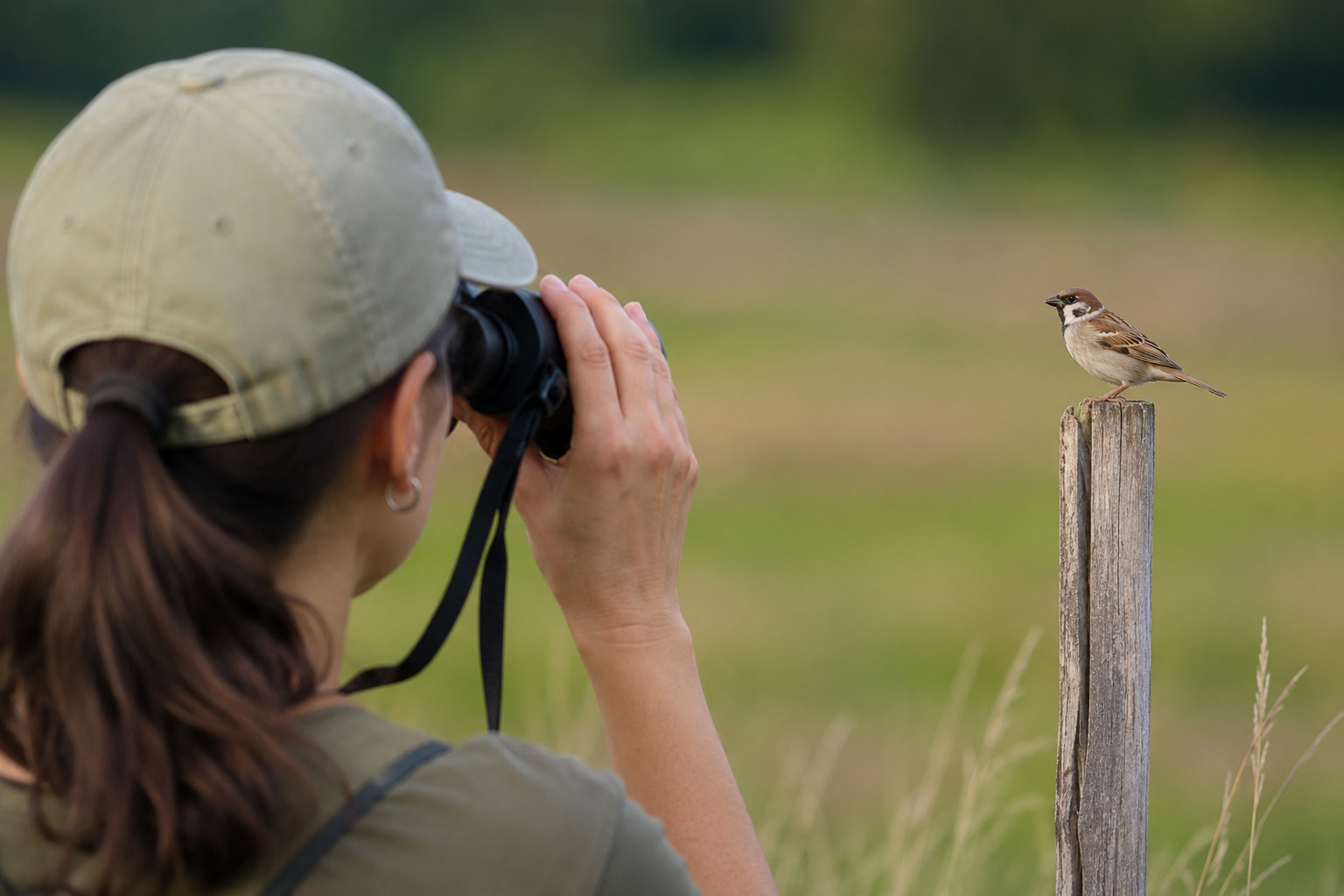
Welcome to the first post in Fledgling Files — a blog series for new birders who are learning to love the outdoors, one humbling misidentification at a time.
There’s a specific kind of confidence that comes right before your most embarrassing birding moment.
You’ve got your binoculars. You’ve got your field guide. You’ve been at this for three whole weeks. You spot a bird on a fence post — brownish, streaky, medium-sized — and something in your gut says: this is it. You squint. You study. You consult the guide. And then, heart racing, you log it.
A Lincoln’s Sparrow. Uncommon. A real find.
You text your birding friend. You add it to your life list. You feel, briefly, like David Attenborough.
Your friend replies: “…that’s a house sparrow.”
Welcome to birding.
The Confidence Trap
Here’s the thing nobody tells you when you start: being good at birding doesn’t mean being right all the time. It means getting very, very good at knowing when you’re not sure.
Seasoned birders walk around with this constant internal monologue of productive uncertainty. Probably a Red-tailed Hawk, but let me check the tail. Looks like a Downy, but what’s the bill length doing? They’ve simply learned to hold their guesses loosely — what birders call a “provisional ID” — until they’ve gathered enough evidence to commit.
New birders, by contrast, tend to leap. We see something exciting, our brain pattern-matches to the coolest option available, and suddenly we’ve “found” a rare warbler in a gas station parking lot in Tulsa.
This isn’t a character flaw. It’s just enthusiasm without calibration. And calibration only comes from one place: making mistakes and paying attention to them.
What the Wrong ID Actually Reveals
Here’s the reframe that will save your birding self-esteem: a wrong ID means you noticed something.
You saw a bird. You registered color, shape, behavior, habitat. Your brain made a connection — even if it made the wrong one. That entire process? That’s the skill. You’re just at the early stage where the connections aren’t refined yet.
Think about what a mistake actually contains:
- You spotted movement. That’s awareness. That’s practice.
- You noticed field marks. Even if you read them wrong, you were looking at the right things.
- You made a decision. Committing to a guess, even incorrectly, forces you to articulate what you actually observed.
Every misidentification is a little diagnostic test. That “Lincoln’s Sparrow” that turned out to be a house sparrow? Now you know exactly what to look for when you see one of each side by side. You will never, ever mix those two up again. That lesson is locked in in a way that reading a field guide entry never would have done.
Your mistakes are basically doing the studying for you. You’re welcome.
The Lifer That Wasn’t (And Why It Still Counts)
Let’s talk about the gut punch.
There’s a special kind of birding heartbreak when you realize the rare bird you logged — the one you got a little excited about, maybe mentioned to a few people — was actually something common. The “Solitary Sandpiper” that was a Spotted Sandpiper. The “Philadelphia Vireo” that was, upon reflection, just a Tennessee Warbler in weird light.
It stings. We know. But here’s the thing:
The excitement you felt was real. Your senses sharpened. Your focus was total. You were completely present in that moment, in a field or a park or someone’s backyard, watching a living creature and trying to understand it. That happened. A misidentification doesn’t retroactively un-happen the experience.
And here’s the practical upside: you are now the world’s foremost expert on the difference between those two birds. You’ve done the emotional labor of caring about the distinction. The correct ID will stick to your brain like a burr.
Even the pros have these moments. The difference is they’ve learned to laugh about it faster.
Building Your Personal Mistake Files
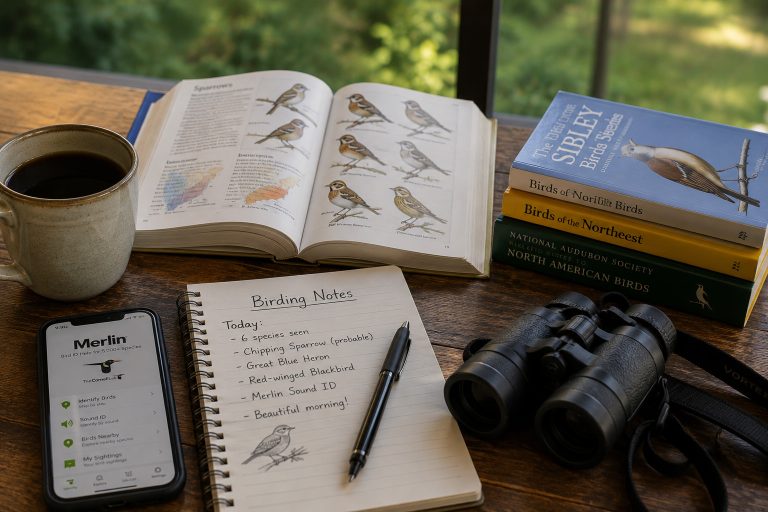
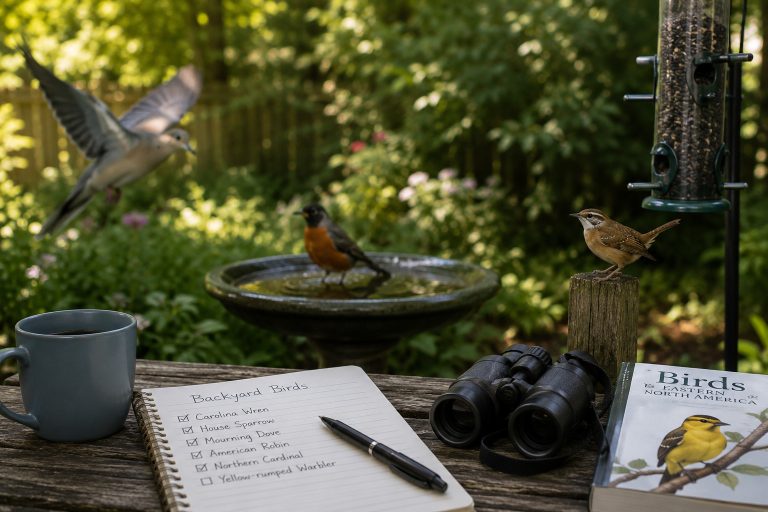
Here’s a practical habit worth starting today: keep a doubt journal alongside your life list.
Your life list is the highlight reel. The doubt journal is the director’s commentary.
When you’re uncertain about an ID — or when you later realize you got one wrong — write it down. Note what you saw, what you thought, and what the bird actually turned out to be. Over time, this becomes an incredibly useful map of your own developing eye. You’ll start to see patterns in your mistakes. (Many new birders, for instance, chronically overestimate warbler rarity in fall, when they’re in their dull non-breeding plumage and everything looks like everything else. Fall warblers are where confidence goes to die, and that’s okay.)
A few things worth logging:
- What you saw (field marks, behavior, habitat)
- What you guessed and why
- What it actually was
- What you’ll look for next time
You don’t have to show it to anyone. It’s just for you. But a year from now, flipping back through it, you’ll see exactly how far you’ve come — and probably find a few entries that make you laugh out loud.
Your Turn
We want to hear it: what’s your most spectacular misidentification? The more confident you were, the better. Drop it in the comments — this is a safe space, we promise.
(Mine was a “Peregrine Falcon” that was, in hindsight, a Mourning Dove flying really fast.)
No judgment here. Only birds, and the humbling, joyful process of learning to see them.
Next up in Fledgling Files: why you don’t need expensive gear to get started — and what you actually do need.
About The Author