Birding in a Texas Summer: Sweat, Sunscreen, and Surprising Birds
 Michael Mathews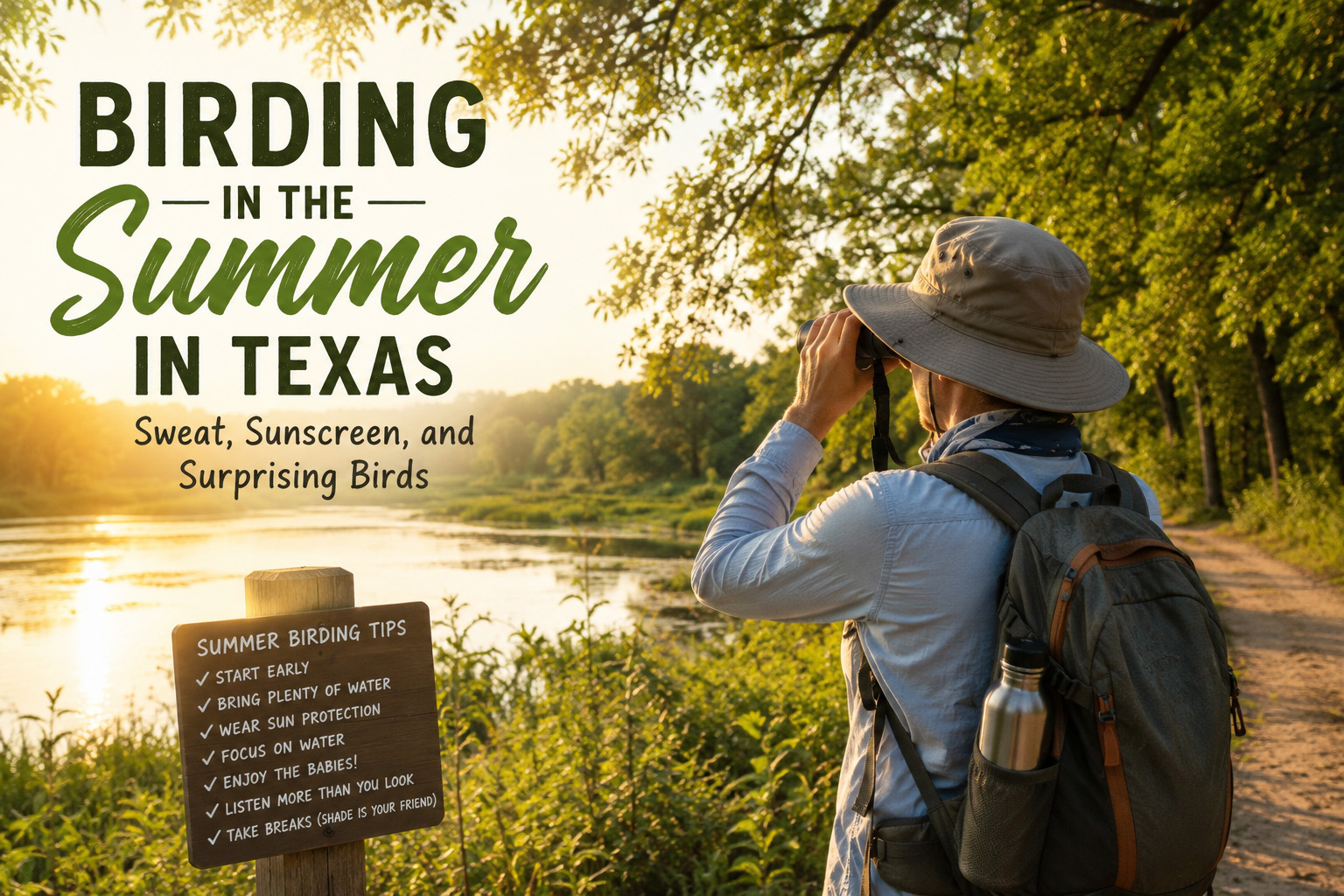
If you’ve never gone birding in a Texas summer, let me paint the picture.
You step out of the truck at 7:00 a.m. The sun is already making plans for your destruction. The humidity wraps around you like a wet wool blanket. Somewhere in the distance, a mockingbird is singing, a cicada is screaming, and your weather app is quietly laughing.
And yet…
Summer birding in Texas can be remarkably rewarding.
While spring migration gets all the attention and winter attracts the rare bird chasers, summer offers something different. It is a season of nesting birds, young fledglings, family groups, and a slower pace that allows birders to appreciate species they often overlook during migration madness.
The trick is learning how to bird smart when the thermometer starts looking like a lottery jackpot.
Start Early or Prepare to Melt
The single best piece of summer birding advice is simple:
Get up early.
Most birds are far more active during the first few hours after sunrise. By mid-morning, many species have already retreated to shade, much like sensible Texans.
An early start not only increases bird activity but also reduces your chances of becoming a cautionary tale in a heat safety brochure.
My favorite summer birding hours are often from sunrise until about 10:00 a.m. After that, both the birds and I tend to negotiate a temporary ceasefire with the weather.
Water Is Not Optional
Texas heat is not merely uncomfortable. It can be dangerous.
Carry more water than you think you’ll need.
Then add another bottle.
Many birders bring binoculars, cameras, field guides, spotting scopes, notebooks, snacks, and enough equipment to launch a small satellite. Yet some arrive with a single bottle of water and an optimistic attitude.
The birds appreciate optimism.
Your body prefers hydration.
Consider carrying:
- Plenty of drinking water
- Electrolyte drinks
- A small cooler in the vehicle
- Healthy snacks
- A hat with a wide brim
If you stop sweating, become dizzy, develop a headache, or feel unusually fatigued, find shade immediately and cool down.
No bird is worth a trip to the emergency room.
Not even a lifer.
Well…
Maybe a lifer.
But still don’t do it.
Dress Like a Desert Explorer
Summer birding fashion is not about making a statement.
Unless the statement is, “I would like to avoid heat stroke.”
Light-colored clothing reflects heat better than dark colors. Lightweight long-sleeved shirts often provide better protection than short sleeves. Many outdoor clothing companies now make breathable fabrics specifically designed for hot weather.
Recommended gear includes:
- Wide-brim hat
- Lightweight long sleeves
- Moisture-wicking clothing
- Comfortable walking shoes
- Polarized sunglasses
- Sunscreen
A neck cooling towel can feel like a small miracle during an East Texas afternoon.
Focus on Water
Birds need relief from the heat just as much as we do.
During summer, ponds, lakes, wetlands, rivers, and even small puddles become bird magnets.
Look around:
- Lake edges
- Marshes
- Reservoirs
- Creek crossings
- Farm ponds
- Water treatment ponds
Many species concentrate near reliable water sources during hot weather, making them easier to find than you might expect.
This is one reason places like Lake O’ the Pines, wetlands around Richland Creek WMA, and numerous East Texas reservoirs remain productive throughout the summer months.
Enjoy the Babies
Summer is family season in the bird world.
One of the greatest pleasures of summer birding is watching young birds learn how to be birds.
You may encounter:
- Young Eastern Bluebirds begging for food
- Juvenile Red-bellied Woodpeckers exploring tree trunks
- Recently fledged Northern Cardinals following parents
- Young Carolina Wrens discovering that life is more complicated than it appeared inside the nest
The youngsters often look awkward, confused, and slightly disheveled.
In other words, they resemble most of us during our first week on a new job.
Listen More Than You Look
Summer foliage can be thick enough to hide an elephant.
Finding birds visually becomes more difficult as leaves fill every available branch.
This is the season to sharpen your listening skills.
Many species are easier to identify by sound than by sight. Learn the songs and calls of common summer birds such as:
- Northern Parula
- Yellow-throated Vireo
- Carolina Wren
- Acadian Flycatcher
- Great Crested Flycatcher
- Red-eyed Vireo
Apps like Merlin Bird ID can be extremely helpful, though they should be viewed as a useful assistant rather than the final judge and jury.
Bird From the Air Conditioning
Who says birding requires suffering?
Some of the most productive summer birding can be done from the comfort of a vehicle.
Many wildlife management areas, refuges, and parks have excellent driving routes.
Your vehicle can function as:
- A mobile blind
- A cooling station
- A snack center
- A rescue pod for overheated birders
The birds rarely care whether you found them from a trail or from behind the steering wheel.
Respect Wildlife During the Heat
Summer is a stressful time for many birds.
Nesting adults are raising young while dealing with extreme temperatures.
A few good practices include:
- Avoid lingering near nests
- Limit playback use
- Stay on designated trails
- Give birds space around water sources
The goal is always to observe without creating additional stress.
The birds have enough challenges already without us adding to the list.
Celebrate the Small Stuff
Summer birding is not usually about huge migration numbers or rare species.
It is about slowing down.
It is about watching a family of Eastern Bluebirds feed along a fence line.
It is about listening to a Northern Parula singing from deep inside a swamp.
It is about discovering that a morning spent under a shade tree with binoculars can still be a pretty good day.
The truth is that Texas summers may test your commitment, your hydration strategy, and occasionally your sanity. But they also offer some wonderful birding opportunities for those willing to adapt.
Just remember:
Drink water.
Wear sunscreen.
Start early.
And if the weather forecast says 103 degrees with humidity that could support marine life, there is no shame whatsoever in conducting a little birding research from an air-conditioned restaurant while eating pie.
The birds will still be there tomorrow.
About The Author