Field Guide Overwhelm Is Real: 900 Species, and Why That Number Should Excite You
 Michael Mathews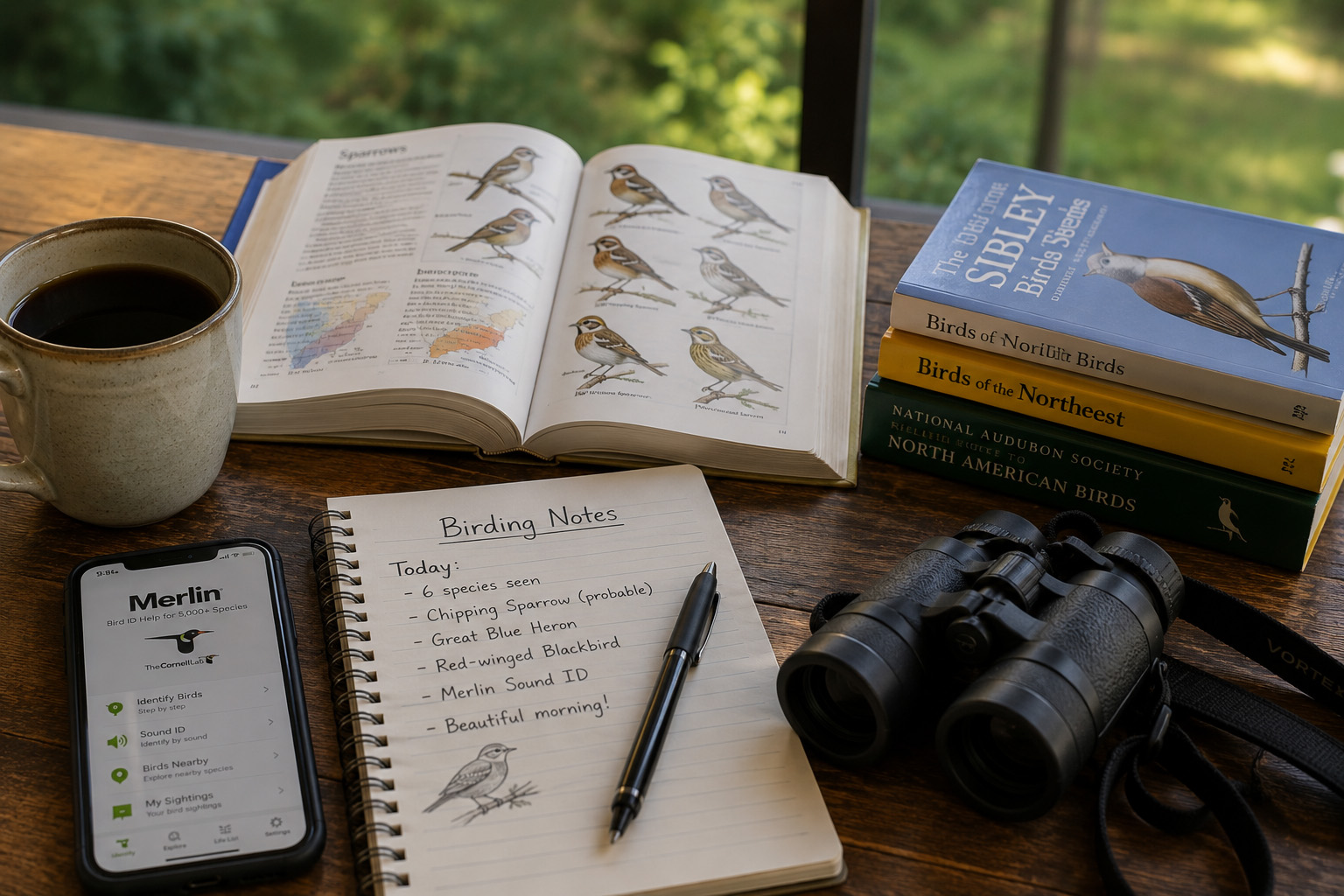
The final post in Fledgling Files — a blog series for new birders who are figuring this out one sparrow, one mistake, and one quiet morning at a time.
Let’s talk about the number.
- That’s roughly how many bird species have been recorded in North America. Nine hundred. If you identified one new species every single day without a break, it would take you nearly two and a half years to see them all — and that’s assuming you could find them, which you can’t, because some of them are rare enough that seeing one requires either extraordinary luck or the kind of dedication that strains marriages.
When most people encounter this number early in their birding life, they have one of two reactions.
The first is excitement: there’s so much out there.
The second is despair: there’s so much out there.
If you’re in the despair camp right now, this post is for you. Because the number isn’t the problem. The problem is how we’ve been taught to think about it.
The Field Guide Spiral
It usually starts innocently enough. You see a bird you don’t recognize. You open your field guide. You flip to what seems like the right section and find seventeen similar-looking species staring back at you, each with subtle differences in bill shape and eye ring width and the exact shade of their tertial feathers.
You read the range maps. Three of the seventeen could plausibly be in your area. You read the habitat descriptions. That narrows it to two. You read the behavioral notes and realize you didn’t actually observe any behavior because you were too busy trying to identify it. The bird, meanwhile, has long since left.
You close the field guide. You open it again. You close it again.
This is field guide overwhelm, and it happens to everyone. The guide that was supposed to help you identify birds has instead revealed the full terrifying scope of how many birds there are and how similar they can look and how much you don’t know.
Here’s the reframe: this is not a problem. This is the beginning of a lifelong conversation.
The Myth of Complete Knowledge
Somewhere along the way, many new birders absorb a quiet assumption: that the goal is to eventually know all the birds. To reach a state of complete competence where every species is immediately recognizable and nothing is uncertain.
This state does not exist. Not for beginners, not for intermediates, and not for the people who have been doing this for fifty years and have seen birds on six continents.
Even expert birders encounter birds they can’t immediately identify. They encounter lighting conditions that make everything ambiguous, angles that hide key field marks, individuals that don’t read the field guide. The difference between an expert and a beginner isn’t the absence of uncertainty — it’s knowing how to work with uncertainty productively.
The 900 species aren’t a curriculum you need to complete. They’re an invitation to a lifetime of noticing. You can RSVP at whatever pace you like.
How to Actually Use a Field Guide
Since we’re here, let’s talk practically for a moment — because field guides are genuinely wonderful tools once you stop trying to use them like a closed-book exam.
Read it like a book, not a reference manual. Spend time with it on the couch, before you go outside, with no bird in front of you and no pressure to identify anything. Get familiar with the families. Notice the layout. Let the information wash over you without trying to memorize it. You’re building a mental index, not a database.
Start with the families, not the species. Learning to recognize that something is a sparrow — even before you know which sparrow — is genuine progress. Warbler or vireo? Shorebird or wader? These broad categories are the scaffolding that specific IDs get hung on later.
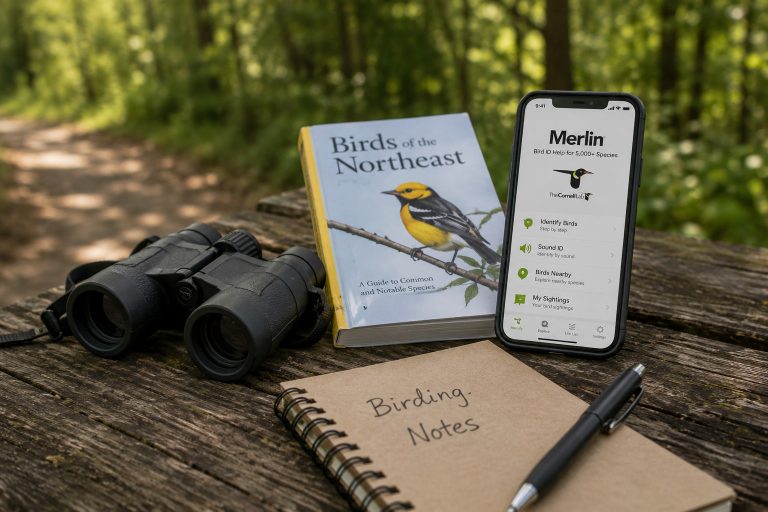
Use multiple resources together. A field guide, Merlin, and eBird’s species accounts give you different angles on the same bird. The guide gives you field marks. Merlin gives you sound. eBird tells you what’s actually likely in your area right now, which immediately narrows the field from 900 to something much more manageable.
Embrace the “probable.” “Probably a Song Sparrow” is a legitimate observation. Log it, note your uncertainty, move on. Provisional IDs aren’t failures — they’re honest data points from someone who is paying attention.
The Secret the Number Is Hiding
Here’s something the 900-species figure obscures: in any given place, on any given day, you are realistically dealing with a much smaller number.
Your local patch in summer might have thirty regularly occurring species. In winter, that list shifts and maybe shrinks to twenty. During migration, it spikes — exciting, disorienting, glorious — but even then you’re working with a comprehensible subset of the total.
The 900 is the master list. Your life is not the master list. Your life is a specific place, a specific season, a specific habitat, and the birds that belong to it. Start there. Build outward.
Most birders, when they reflect on how they actually learned, describe something like concentric circles. They knew their yard birds first. Then their neighborhood. Then their region. Then migration brought new things through and expanded the circle. Then a trip somewhere different expanded it again. The 900 arrived gradually, over years, in manageable pieces, as the natural consequence of paying attention to wherever they happened to be.
Nobody sat down and learned 900 birds. They learned the birds in front of them, repeatedly, until there were a lot of them.
What You Actually Need to Know Right Now
Not 900 things. Here’s the real list:
How to be outside and pay attention. You’ve been practicing this since post one. You’re already doing it.
What’s common in your area. eBird’s bar charts for your county will show you exactly which species appear in which months and how frequently. Print it out. These are your birds. Start here.
How to describe what you see. Before you can identify a bird, you need to notice it accurately — size relative to known birds, bill shape, behavior, habitat. This skill develops with practice and is worth more than any amount of memorization.
That uncertainty is normal. Say it with me: I don’t know what that was, and that’s fine. It will come back. You’ll see it again. Birds are not one-time events.
That this takes time, and time is the whole point. Birding is not a problem to be solved. It’s a practice to be sustained. The birders who are happiest aren’t the ones with the longest life lists — they’re the ones who never stopped finding reasons to go outside and look.
Where We’ve Been
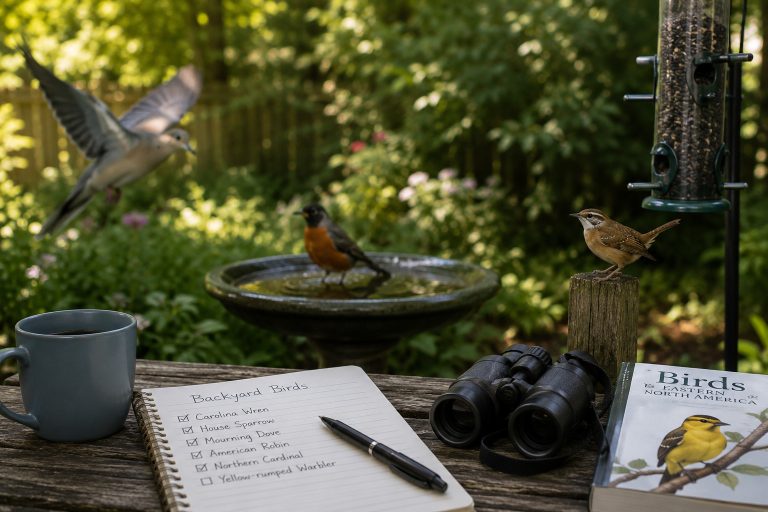
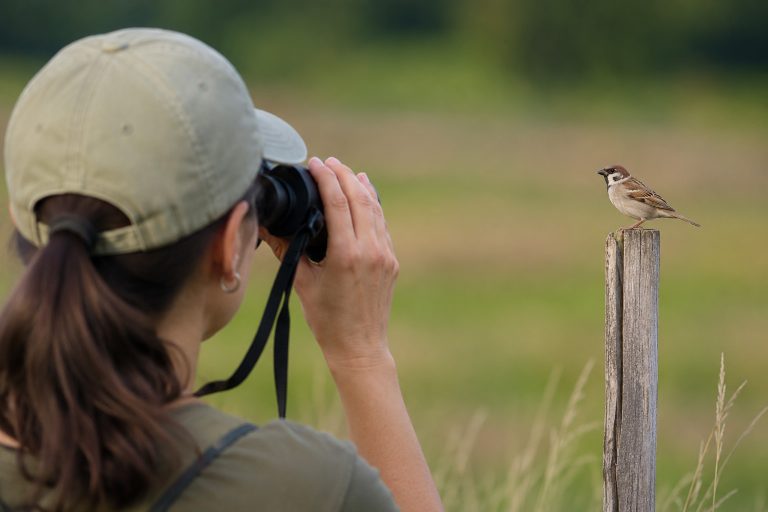
Five posts ago, you misidentified a house sparrow as something rare and felt briefly like David Attenborough. Since then you’ve learned that decent binoculars don’t have to cost a fortune, that your backyard is more interesting than you thought, that slowing down is both a birding strategy and a life strategy, and that 900 species is an invitation rather than a sentence.
None of this makes you an expert. It makes you a birder — which is a different thing entirely. An expert is trying to have all the answers. A birder is trying to ask better questions.
The questions are outside. They’ve been there the whole time.
Go find them.
Thanks for reading Fledgling Files. Now close this tab and go look at a bird.
About The Author