Texas Birding Festivals are a great way to increase your lifer totals, add more counties to your Century Club totals, make new birder friends, and HAVE FUN!
FEBRUARY
Laredo Birding Festival – Lardeo. February 3-6
Whooping Crane Festival – Port Aransas. February 19-22
MARCH
Matagorda Bay Birdfest – Palacios. April 17-19
APRIL
Spring Chirp – Weslaco. April 8-11
Texas Mid-coast Birding Festival Port Lavaca. April 9-12
Brownsville Birding Festival – Brownsville. April 11-12
FeatherFest Birding and Nature Photography Festival – Galveston. April 15-18
Birdiest Festival in America – Corpus Christi. April 22-26
Birding the Border in Del Rio. (Not really a Texas Birding Festival – it is for Texas Ornithological Society members ) April 29 – May 30.
AUGUST
Davis Mountains Hummingbird Festival – Fort Davis. August 14-17
MAY
Hagerman National Wildlife Refuge & Sherman Bird Festival – Sherman & Hagerman National Wildlife Refuge. May 16th
SEPTEMBER
Celebration of Flight – Corpus Christi. September 25-27
Hummerbird Festival – Rockport. September 17-20
NOVEMBER
Rio Grande Valley Birding Festival – Harlingen. November 11-15
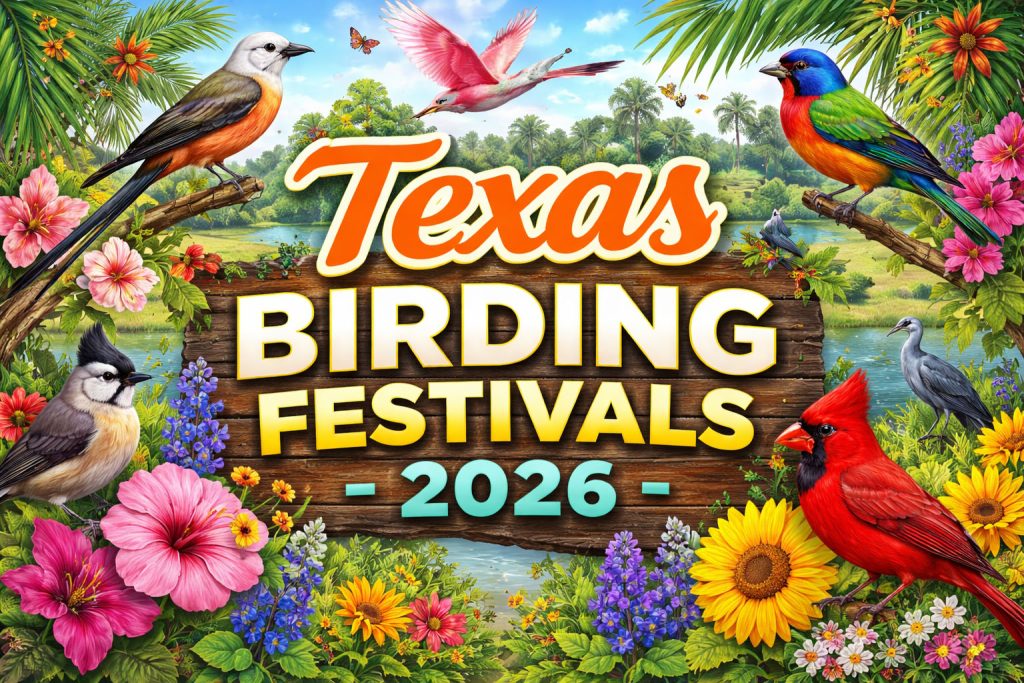
Texas Birding Festivals 2026
Birding fun all over Texas – all year long!
If you’re a Texas birder, you already know something the rest of the country is slowly figuring out: Texas is not just good for birding. It’s unfairly good. In 2026, the Lone Star State once again rolls out a calendar packed with festivals that showcase everything from endangered cranes and tropical rarities to fallout warblers that drop from the sky like feathered confetti.
Whether you’re chasing lifers, sharpening your ID skills, testing new gear, or simply wanting to bird with people who understand why you get excited about a distant speck on a mudflat, these Texas Birding Festivals in 2026 are where the action is.
Winter in South Texas: Where the Rare Stuff Lives
The year kicks off in South Texas, a region that feels less like the United States and more like a biological handshake with Mexico. The Laredo Birding Festival (February 4–7, 2026) offers access to private ranches, river habitats, and brush country where specialty birds lurk like VIP guests behind velvet ropes.
Not long after, the coast hosts the beloved Whooping Crane Festival (February 19–22, 2026) in Port Aransas. Seeing these towering, snow-white birds in the wild is the kind of experience that makes even seasoned birders go quiet for a moment, which is saying something.
Winter Texas Birding Festivals are ideal for raptors, waterfowl, shorebirds, and those South Texas specialties that refuse to move north no matter how politely we ask.
Spring Migration: The Main Event (Bring Snacks)
If Texas birding had a Super Bowl, it would be April. There are more Texas Birding Festivals in April than in any other month.
The Texas Mid-Coast Birding Festival (April 9–12, 2026) in Port Lavaca offers guided trips to prime coastal habitats, including areas not normally open to the public. Translation: places where birds gather without worrying about humans photobombing their migration.
The Rio Grande Valley gets its turn with the Brownsville Birding Festival (April 11–12, 2026), a hotspot for tropical species found nowhere else in the U.S. Expect Green Jays, Altamira Orioles, and the occasional moment where you wonder if you accidentally crossed an international border.
Then comes FeatherFest (April 14–20, 2026) in Galveston, one of the most famous birding festivals in North America. During peak migration, the island becomes a landing strip for exhausted birds crossing the Gulf. On the right day, you don’t have to look for birds. You just stand still and let them come to you.
The coastal run continues with the Matagorda Bay Birdfest (April 17–19, 2026) and the exuberantly named Birdiest Festival in America (April 22–26, 2026) in Corpus Christi, both offering expert guides, photography opportunities, and enough species to make your checklist sweat.
Besides all the Texas Birding Festivals, running alongside all this is the legendary Great Texas Birding Classic (April 15–May 15, 2026), where teams compete to see the most species while raising money for conservation. It’s birding with a stopwatch and a conscience.
More Than Just Birds (But Mostly Birds)
Some festivals lean heavily into education, making them perfect for newer birders or families. Events like Birding the Border and local bird fests offer guided trips for all skill levels, workshops on identification and photography, and access to habitats you might not explore on your own.
And perhaps most importantly, festivals are where you meet your people. The ones who will happily debate gull ID before sunrise and loan you a spotting scope without asking for collateral.
Fall Birding: Because Texas Never Turns the Lights Off
By September, migration shifts into a different gear. Houston Bird Week (September 19–26, 2026) highlights the city’s surprising role as a migration superhighway, with programs ranging from guided walks to conservation talks.
Fall may not get the hype of spring, but it delivers hawks, shorebirds, and a second wave of songbirds heading south. Plus, temperatures are kinder, and mosquitoes are slightly less enthusiastic.
Why Texas Birders Should Mark Their Calendars Now
Texas hosts more bird species than any other state, thanks to its staggering range of habitats. Attending even one Texas Birding Festival can add dozens of species to your life list. Attending several can feel like flipping your field guide from “aspirational reading” to “completed checklist.”
But numbers aren’t the whole story.
These Texas Birding Festivals offer something harder to quantify: shared excitement, field wisdom from top guides, access to special places, and the kind of memories that resurface every time you hear a familiar call note.
In other words, they remind you why you started birding in the first place.
So charge the camera batteries, clean the lenses, dust off the scope, and make your plans early. The birds will be here whether you are or not. But trust us, you’ll want to be.
More Stories
Plan the Perfect High Island Birding Trip: eBird Tips, Weather Strategy & Must-Visit Sanctuaries
How to Quickly Attract Hummingbirds in Texas: Feeders, Nectar Recipe, and 10 Tips
Spring Migration 2026 – Incredible High Island & Sabine Woods Field Trip 04/22-23/26