Your Backyard Is a Hotspot: The Best Birding Spot You’ve Been Ignoring
 Michael Mathews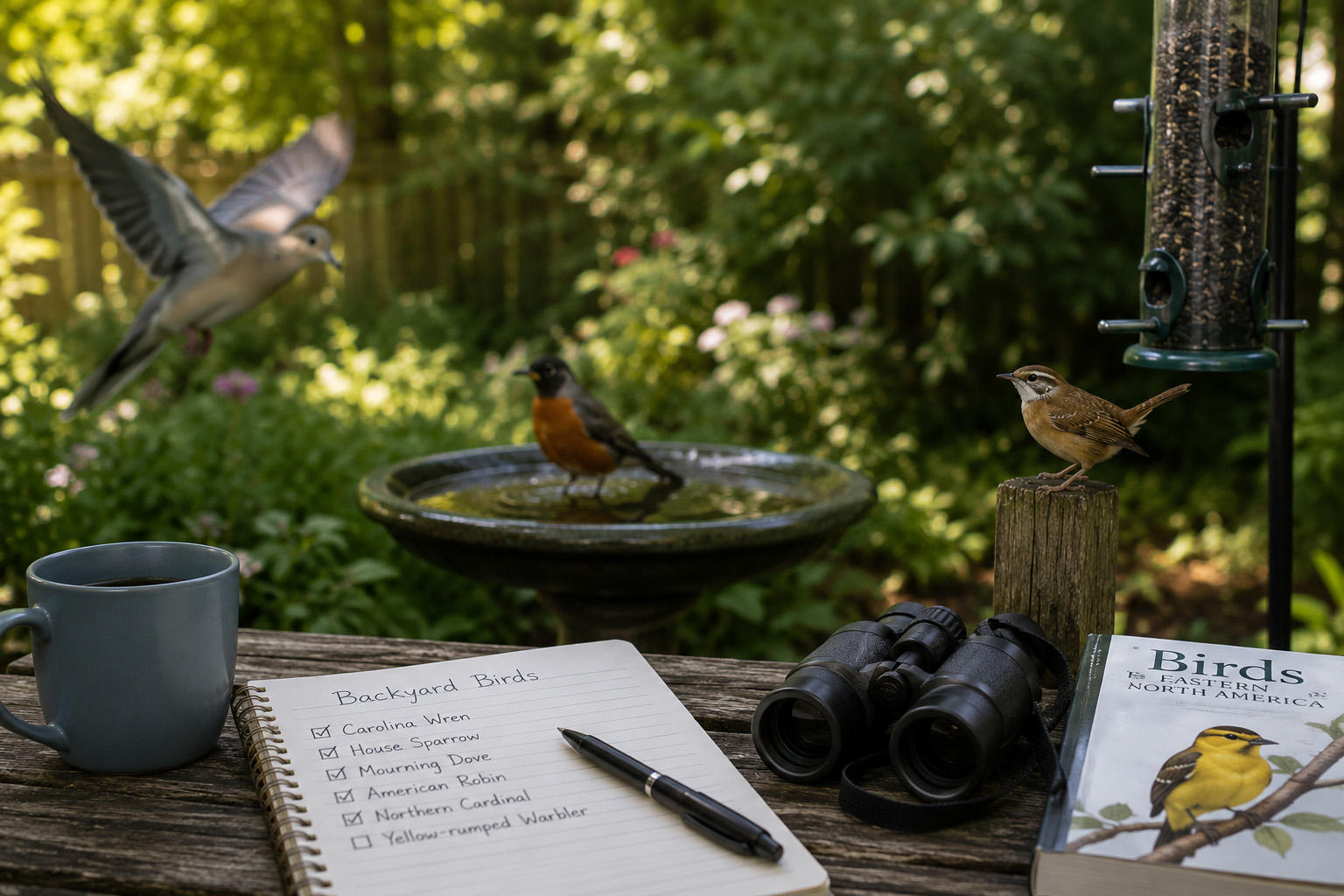
Part three of Fledgling Files — a blog series for new birders discovering that the birds were there all along.
There’s a pilgrimage that almost every new birder plans.
You’ve read about a famous wildlife refuge two hours away. It’s listed in your field guide’s appendix. Someone on a birding forum described it as “exceptional for shorebirds in migration season” and you’ve been thinking about that phrase ever since. You’re going to go. You’re going to see something extraordinary. You’re going to come back a changed person.
This is a fine plan. You should absolutely do it eventually.
But here’s what happened while you were planning: a pair of Carolina Wrens built a nest in your garage, a Sharp-shinned Hawk passed directly over your driveway twice this week, and a Yellow-rumped Warbler has been working through your hedge every morning like it’s clocking in for a shift.
You walked past all of it.
The most productive birding location you have access to isn’t two hours away. It’s wherever you spend the most time. And for most of us, that’s home.
Familiarity Is a Superpower
Here’s something that takes most birders a while to learn: finding rare or interesting birds isn’t just about going to the right places. It’s about knowing what wrong looks like.
When you’ve watched the same patch of trees enough times, you develop an unconscious baseline. You know which birds show up, in what numbers, at what times of day and year. And then one morning something is subtly different — a bird with an unfamiliar shape, a song that doesn’t fit, a species behaving in an unexpected way — and you notice. Not because you’re an expert, but because you know this place.
Birders call this “patch birding,” and it’s responsible for a surprising number of rare bird discoveries. The birder who finds the out-of-range vagrant isn’t always the one who traveled farthest. It’s often the one who has walked the same trail behind their neighborhood so many times that they notice immediately when something doesn’t belong.
You can start building that knowledge right now. Today. Without going anywhere.
What’s Actually Out There (Probably)
Let’s talk about the birds you’ve been underestimating.
House Sparrows — yes, those ones — have complex, fascinating social hierarchies. The males with the largest black bibs tend to dominate access to food and mates, which means you can actually watch status and competition play out in real time at your feeder. That’s behavioral ecology, and it’s happening six feet from your kitchen window.
Mourning Doves are weirder than they look. They’re one of the few birds that can suck water up through their bill like a straw — most birds have to tilt their heads back to swallow. They also produce “crop milk,” a protein-rich secretion they feed to their chicks, which puts them in very unusual company among birds. The soft, dopey bird on your fence post contains multitudes.
American Robins do something every spring that most people completely miss: they sing. Not just occasionally — they sing for extended periods, often before dawn, with a rich and varied song that most people have heard thousands of times without ever connecting it to the bird. If you’ve ever woken up to what sounded like a very enthusiastic, slightly chaotic flute, that was probably a robin. Go find one and listen.
Northern Mockingbirds, if you’re lucky enough to have one nearby, are showoffs of the highest order. A single mockingbird can learn dozens of other species’ songs and will cycle through them at length, especially at night. If something outside sounds like it can’t possibly be one bird — it’s probably one bird.
The “common” birds aren’t boring. They’re just familiar. And familiarity, it turns out, is where real understanding begins.
How to Turn Your Yard Into a Better Habitat
If you want more birds to watch, the good news is that a few small changes make a real difference. The better news is that none of them require much money or effort.
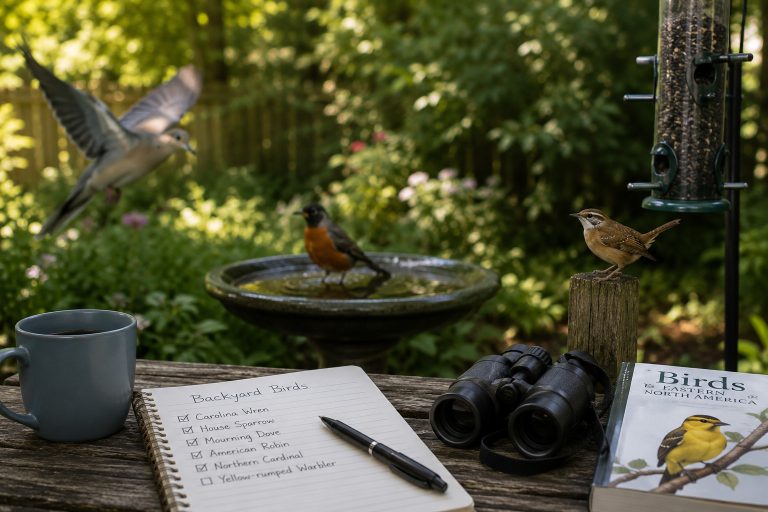
Water first. A simple bird bath — or even a shallow dish on the ground — will attract more species than almost any feeder. Birds need water year-round, and clean, fresh water is often harder to find than food. Keep it shallow (two inches or less), change it every couple of days, and put it somewhere you can see it from inside. You’ll be amazed what shows up.
A basic feeder with black-oil sunflower seeds covers an enormous range of species and is the single most efficient feeder investment you can make. Avoid the “mixed seed” bags — most birds will pick through them for the sunflower seeds and throw everything else on the ground anyway. Skip the middleman.
Leave some mess. Resist the urge to tidy up every corner of your outdoor space. Dead plant stems hold insect larvae. Leaf litter shelters ground-feeding sparrows. A brush pile in the corner of a yard is, to a Hermit Thrush, basically a five-star hotel. Impeccably manicured gardens are beautiful and almost entirely birdless.
Native plants are the long game. If you’re willing to invest a little more, native plants attract the insects that attract the birds. A native shrub that produces berries in fall will do more for your local bird population than any feeder. Your local native plant society or nursery can point you toward the best options for your region.
For renters and small-space dwellers: a window feeder with suction cups, a hanging water dish on a balcony railing, and a potted native plant or two can make a meaningful difference even with very limited space. Birds aren’t picky about the real estate.
The Patch Mindset
There are two broad philosophies in birding, and most birders lean toward one or the other.
The first is the “listing” approach — traveling widely, seeking out new species, building a life list that spans geographies and habitats. This is exciting and legitimate and a lot of fun.
The second is patch birding — returning again and again to the same place, building deep and layered knowledge of it across seasons and years. Knowing not just what birds are there, but when they arrive, where they prefer to be, how their behavior shifts through the year.
Many experienced birders — including some of the most accomplished — will tell you that patch birding is the most rewarding thing they do. There’s something genuinely profound about knowing a place well enough to read it like a text. To look at a stand of trees in October and know, from the light and the temperature and the wind direction, that it’s exactly the kind of morning when a bird you’ve never seen there before might appear.
Your backyard, your nearest park, the scrubby median you walk past every day — any of these can be your patch. You don’t need to go somewhere remarkable. You need to go somewhere repeatedly.
The Birds Were Always There
Here’s the quiet truth at the center of all of this:
The birds didn’t arrive when you started paying attention. They were always there — in the hedges, on the wires, moving through the canopy above streets you’ve walked a hundred times. What changed wasn’t the birds. It was you.
That shift in attention is the whole game. It’s what birding actually is, underneath all the gear and the lists and the Latin names. It’s the practice of looking carefully at the world you already live in and finding it stranger, richer, and more alive than you knew.
The wildlife refuge will still be there. Go when you’re ready. But tonight, before you close the curtains, take one look out the window.
Something’s probably out there.
Next up in Fledgling Files: why getting lost in a field guide isn’t the problem — it’s actually the beginning of something good.
About The Author