What’s In My Birding Bag? The Exact Gear I Use in the Field
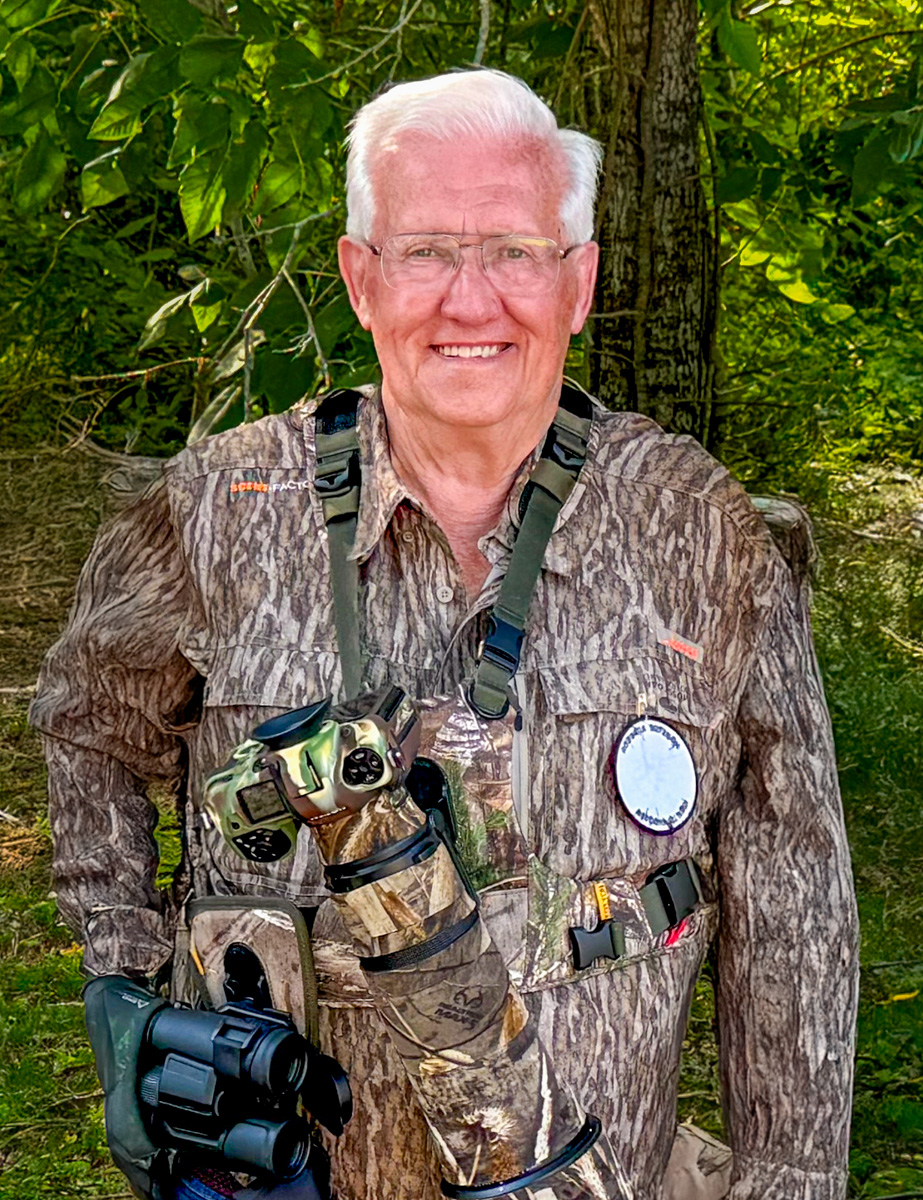
Michael Mathews, Editor of Texas Birder
Cameras, Binoculars, Scope, Tripods, etc I Use Every Day
Birders love gear talk. Put three bird photographers around a picnic table with coffee and the conversation will drift toward lenses, binoculars, tripods, and whether someone really needs another camera body. (The answer, naturally, is always “probably.”)
People often ask what equipment I use in the field, so I thought I’d pull back the curtain and show you the gear that goes with me again and again. This isn’t a list built in a studio or dreamed up from catalogs. This is the equipment that has ridden in trucks, sat in mud, baked in Texas heat, endured coastal salt spray, and helped me come home with birds on memory cards and smiles on my face.
These are tools I trust.
And yes… there may be lighter gear.
And yes… I may have occasionally looked like a sherpa crossing a marsh.
Worth it.
I did not include the lenses I use. I may come back and add those. There are several that I use regularly.
I really don’t expect anyone to just jump up and buy something because I list it here, but if you want more information on any of these items, you can click on the Amazon button below each one. If you click on it, you will be taken to a page where you can read the specifications and, more importantly, read the reviews. Of course, you can also purchase it there.
Cameras I Trust
Nikon Z9 (My Preferred Camera)

If there’s a camera that feels like it was built by people who actually chase birds, it may be the Nikon Z9.
This is my primary bird and wildlife body, and for good reason.
The autofocus tracking is astonishing. Birds in flight, fast action, erratic movement… the Z9 seems to understand what I’m trying to do sometimes before I do.
What I love:
- Exceptional subject tracking for birds in flight
- Incredible detail and dynamic range
- Built like a tank wearing a tuxedo
- Weather sealing that inspires confidence
- Silent shooting that keeps skittish subjects calm
- The battery life is incredible
For serious bird photographers, this camera is a powerhouse. It doesn’t just keep up. It hunts.
If I had to head into migration with one camera, this would be it.

Nikon Z8 (The Backup That Isn’t Really a Backup)

Calling the Z8 a “backup” feels unfair.
It’s more like a Z9 that went on a diet.
Same superb image quality. Same excellent autofocus. Lighter body.
I have it as backup, but plenty of photographers could make it their main camera and never look back.
Why I love it:
- Fantastic second body for travel or long field days
- Lighter than the Z9
- Shares much of the same performance DNA
- Outstanding for bird and nature work
The reason is a backup to the Z9 is battery life. I can shoot all day with the Z9 without changing batteries. To shoot the same number of photos with the Z8, I would need at least 3 batteries.
When your backup camera is this good, “backup” starts sounding almost insulting.
Binoculars I Use Constantly
Vortex Viper HD 10×42 (My Primary Glass)

These are on me almost every day.
Sharp. Bright. Durable.
Good binoculars disappear when you use them. They stop being equipment and become extension of your eyes.
That’s what these do.
Why they stay around my neck:
- Excellent clarity and contrast
- Bright optics in low light
- Tough and reliable
- Comfortable for long days afield
- Great balance of quality and value
These have found warblers in dim woods, distant raptors over marshes, and probably saved me from misidentifying a few “rare birds” that were… not rare birds.
Humbling happens.
For most of my birding life, I have used and recommended 8×42 binoculars as they make it much easier to spot the birds through the glass. With the 10×42, you have to be right on the bird, and it is sometimes difficult to zero in. But once you have it in view, you can see much more detail. As my years accumulate, my eyes need more help with detail. Practice with my 10×42 binoculars has made me more skilled in zeroing in, but it is not as easy. Seeing the detail, at my age, is worth the extra effort to locate the bird.
Vortex Diamondback HD 8×42 (My Most Recommended Binoculars)

If someone asks me what binoculars I recommend most often, this is usually where I point them.
Because they punch way above their price.
Excellent starter binoculars.
Excellent backup binoculars.
Honestly… just excellent binoculars.
Why I recommend them so often:
- Affordable without feeling cheap
- Very solid optics
- Easy handling
- Great field of view
- Fantastic value
These have introduced a lot of birders to good glass.
And good glass changes everything.
My Spotting Scope
Vortex Diamondback HD 20-60×85 Spotting Scope

For shorebirds, waterfowl, distant raptors, or scanning huge wetlands, a scope is magic.
This one delivers.
That 85mm objective gathers light beautifully, and at distance it lets me study birds I’d never confidently identify with binoculars alone.
What I like:
- Bright, sharp views
- Great for shorebirds and waterbirds
- Solid performance for the price
- Rugged and dependable
Sometimes a spotting scope doesn’t just help you see birds.
It helps you see birds everyone else missed.
That’s a delicious little secret.
Tripods That Earn Their Keep
Vanguard Alta Pro 263AT

Reliable. Stable. Proven.
This has been a trusted workhorse for me.
And “workhorse” is a compliment.
SmallRig AD-01 Video Tripod

When wind starts howling and lighter tripods begin dancing like nervous flamingos…
This comes out.
The fluid head is smooth, stable, and excellent for scope work or video.
Features I love:
- Remarkably sturdy
- Fluid head movement
- Handles windy conditions beautifully
- Great value for a heavy-duty setup
In Texas spring gusts, this thing stays rock steady.
My Monopod Secret Weapon
Leofoto MP-284 Carbon Fiber Monopod

A monopod can be the unsung hero of bird photography.
This one is.
When carrying long glass for hours, it can save your shoulders and steady your shots.
Why I carry it:
- Lightweight carbon fiber
- Excellent support with long lenses
- Faster and more mobile than tripod work
- Perfect for roaming bird photography
Sometimes the best piece of gear is the one that keeps you photographing for another three hours.
The Tiny Gadget I Wouldn’t Want to Lose
Slicker Bino Bandit

This little thing does not get enough love.
The Bino Bandit blocks side light and glare around your eyepieces.
Sounds simple.
It is.
And it works.
Especially in bright conditions, it can noticeably improve viewing.
Tiny gadget.
Big payoff.
Possibly the most underappreciated piece of gear I own. Especially when trying to locate a bird that is in deep shadow amongst the leaves and branches while you are standing in the bright sunlight.
The Most Controversial Thing in My Birding Bag
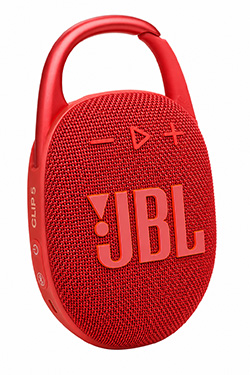
JBL Clip 5 Portable Bluetooth Speaker
Sometimes the smallest gear creates the biggest discussions.
Enter the JBL Clip 5.
Mine clips easily onto a backpack, belt loop, camera bag, or just about anything else. It is waterproof, dustproof, available in enough colors to satisfy everyone from serious naturalists to people who think camouflage should be a lifestyle choice, and it is surprisingly loud for its size.
In fact, “surprisingly loud” may be understating the case.
A better description might be: “small enough to fit in your hand, loud enough to convince nearby counties that a bird has arrived.”
The JBL Clip 5 has become one of my favorite field accessories because it is compact, durable, easy to carry, and provides clear audio when needed for educational purposes, training, or limited bird identification assistance.
A Word About Playback Ethics
This is where things get important.
Just because a playback device can be loud does not mean it should be.
Birders have debated the use of recorded bird calls for decades, and there are good reasons for caution.
During migration, a brief playback can occasionally help confirm the presence of a bird that is already nearby. However, even then, restraint is important.
During breeding season, playback becomes much more problematic.
A territorial bird may abandon feeding, courtship, nest defense, or other important activities to investigate what it believes is a rival intruder. Repeated playback can create unnecessary stress and energy expenditure at a time when birds are already working hard to raise young.
Rare birds deserve even greater consideration. If dozens of birders repeatedly use playback on the same individual, the cumulative impact can be significant.
My personal rule is simple:
Use playback sparingly, briefly, and only when there is a legitimate educational or identification purpose. If the bird responds, stop. If the bird appears agitated, stop. In the Spring, when birds are establishing territories and attracting mates, don’t use playback at all.
The goal of birding is not simply to see birds.
The goal is to enjoy birds while causing as little disturbance as possible.
Why I Carry It
The JBL Clip 5 earns a place in my gear because it is reliable, rugged, and easy to use. Whether I am teaching new birders, sharing recordings during a workshop, or occasionally using carefully considered playback in appropriate situations, it performs exceptionally well. It is LOUD.
And unlike some pieces of birding equipment, it doesn’t require a second mortgage.
Just remember:
A speaker is a tool.
Good judgment is the accessory that should always come with it.t here
My Philosophy on Gear
People sometimes think better gear makes better bird photographers.
Not exactly.
Skill matters.
Patience matters.
Field craft matters.
Knowing where the birds are helps a shocking amount. Revolutionary concept. 😄
But good equipment removes obstacles.
It lets you work faster, see better, react sooner, and enjoy the field more.
That matters.
Every item above has earned a place because it performs.
Not because it looks good in a catalog.
Because it works.
If I Were Starting Again…
If I were building a kit from scratch, I’d strongly consider:
- Vortex Diamondback HD 8×42 for binoculars
- Nikon Z8 as a superb bird photography body
- Vortex Diamondback HD 20-60×85 Spotting Scope for long-distance birding
That would be a formidable setup.
Very formidable.
Possibly “accidentally spend all afternoon chasing shorebirds” formidable.
Final Thoughts
Gear should invite you outside.
It should help you hear the marsh waking up before sunrise.
Help you lock onto a warbler flickering through live oaks.
Help you freeze an osprey in mid-plunge.
Help you notice.
That’s the real point.
These are the tools I use to do that.
And they’ve served me very, very well.
If you have questions about any of this gear, or what I’d recommend for different budgets, let me know.
Birders can talk optics almost indefinitely.
It is one of our more charming afflictions.
I am a participant in the Amazon Services Associates Program, which means that when you click on one of our Amazon links and make a purchase, we may earn a small commission — at no extra cost to you. It’s Amazon’s way of saying thanks for sending you their way!
About The Author