Why Sabine Woods Is Better Than High Island for Spring Migration
Sabine Woods May Be the Best Place in Texas to Witness Spring Migration
Every April, birders begin making pilgrimages to the upper Texas coast with the same hopeful question in mind:
Where will the migration be best?
For many, the automatic answer is High Island. It has legendary status. It deserves it. The names alone stir the blood of birders: Boy Scout Woods, Smith Oaks, Hooks Woods. For decades, these sanctuaries have been spoken of almost in reverent tones, and rightly so.
But after many years of walking both places, leading trips, photographing migrants, and spending long spring mornings with binoculars fogging up in the coastal humidity, I’ll say something some may consider borderline heretical:
For observing bird migration, especially seeing migrants well, I think Sabine Woods is better than High Island.
There. I said it.
And I can already hear the collective gasp from the bleachers at the drips.
But hear me out.
Sabine Woods Is Migration in Stereo
High Island can be spectacular.
Sabine Woods can be magical.
There is a difference.
At High Island, migrants can sometimes feel scattered through a series of sanctuaries. At Sabine Woods, on a good day, migration can feel concentrated. Compressed. Poured into one green cathedral.
When conditions line up, north winds after overnight migration, maybe a little weather, maybe birds dropping after crossing the Gulf, Sabine can feel less like birding and more like opening a jewel box.
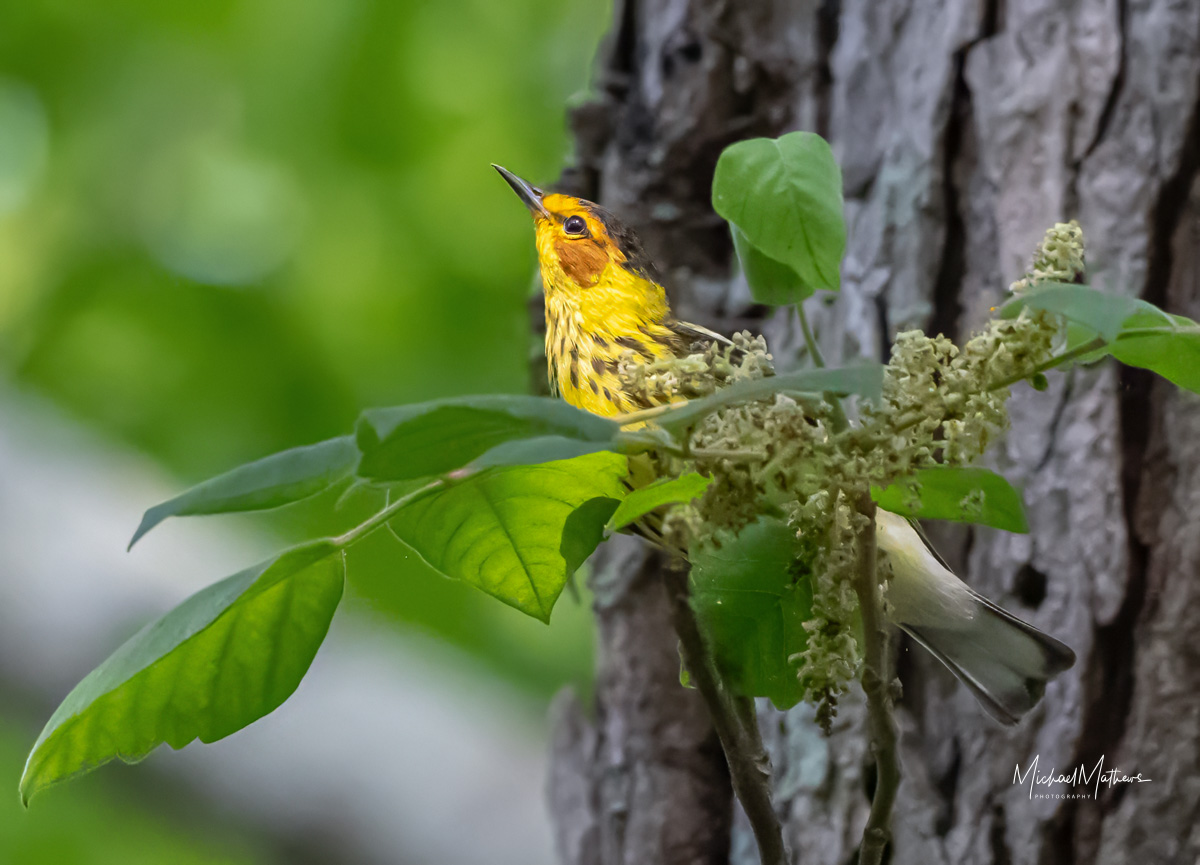
Warblers may be feeding eye-level.
Tanagers can glow in morning shade.
Thrushes appear where moments before there was only leaf litter.
Sometimes birds are so close it feels almost rude to raise binoculars.
And unlike some areas at High Island where birds can be elevated in taller canopy or dispersed through broader habitat, Sabine often delivers migrants at astonishingly intimate viewing distances.
Not “seen.”
Experienced.
The Habitat Is Built for Birders
Sabine Woods has a layout that seems almost designed by a birder who secretly negotiated with warblers.
Oak mottes.
Openings.
Edges.
Freshwater drip areas.
Trails that funnel movement.
A woodland structure that concentrates birds in ways that make finding and observing them easier.
And edges, in birding, are the Buc-ee’s of habitat. Everybody stops there.
The sanctuary acts as a migrant trap in miniature.
You are often not hunting birds.
You are waiting for birds to come to you.
That is a profound difference.
Sabine Woods is better than High Island.
The Birds Can Be Ridiculous
Let’s talk examples.
On good April mornings at Sabine, it is entirely possible to encounter:
- Prothonotary Warblers glowing like dropped gold
- Hooded Warblers popping out of shadows like little masked bandits
- Kentucky Warblers walking the understory like tiny suspicious chickens
- Blackburnian Warblers carrying throats apparently lit from within
- Cerulean Warblers overhead if fortune smiles
- Blue-winged, Golden-winged, and the occasional “wait… what did I just see?”
- Philadelphia and Red-eyed Vireos moving through together
- Scarlet Tanagers looking like escaped tropical fruit
- Rose-breasted Grosbeaks at absurdly close range
- Indigo and Painted Buntings sometimes in the same morning, which ought to be illegal
And then there are fallout mornings.
The famous fallouts.
At High Island they can be legendary.
At Sabine they can feel personal.
Birds dripping from every level of vegetation.
Warblers feeding beside the trail.
Orioles dropping into view.
Thrushes everywhere.
Birders whispering in that hushed church-voice people use when miracles may be listening.
I have had mornings there where every few yards someone muttered,
“What on earth is THAT?”
which is basically the highest form of birder prayer.
Sabine Woods is better than High Island.
Fewer People, Less Circus
Let us be honest.
High Island can sometimes resemble a feathered theme park.
Wonderful, but busy.
Especially around famous drips.
You may be sharing a rarity with:
- Forty photographers
- Twenty birders
- Three trip leaders
- Someone loudly playing Merlin at full volume
- A man explaining to everyone that he had this bird in Guatemala in 1987
At Sabine Woods?
Often quieter.
Calmer.
Less elbowing.
More room to listen.
More room to watch behavior.
More room for that lovely thing called discovery.
You can actually hear the birds.
Imagine that.
Better for Photography
As a nature photographer, this matters.
Sabine often offers:
- Lower, more accessible birds
- Better backgrounds
- More intimate encounters
- Cleaner shooting lanes
- Beautiful filtered woodland light
At High Island, especially at drips, photography can sometimes be “shoot between six shoulders and a monopod.”
At Sabine, it can feel like the birds agreed to hold still for portraits.
Not always.
But often enough.
Just another reason Sabine Woods is better than High Island.
Even the Welcome Feels Better
A small but important thing.
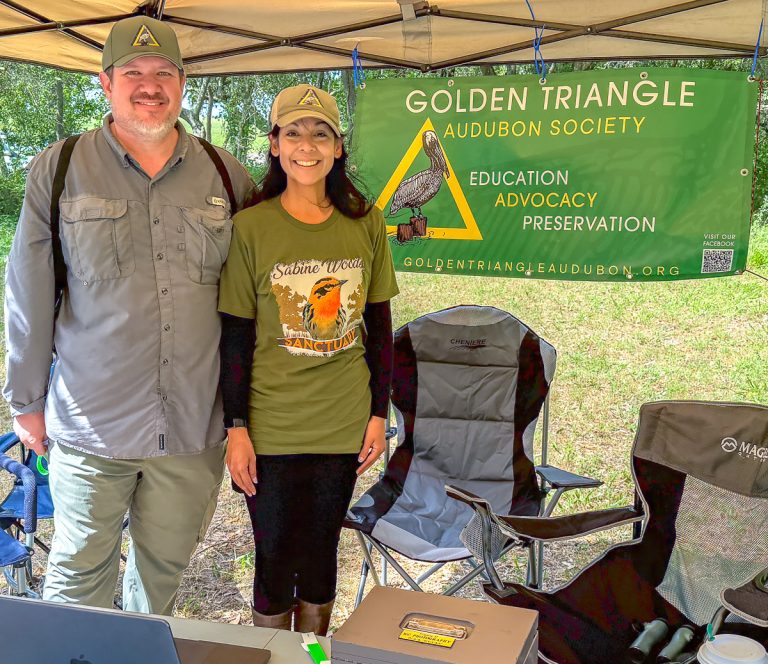
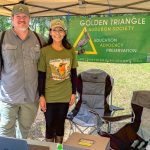
The welcome booth staffed by Golden Triangle Audubon Society has become one of the quiet strengths of Sabine Woods. Their volunteers do far more than collect entrance fees. They help create the culture of the place.
They share recent sightings.
They point newcomers in the right direction.
They help visiting birders know what has dropped in overnight.
They answer questions with patience and enthusiasm.
And perhaps most importantly, they make Sabine feel welcoming.
There is something deeply satisfying about arriving at dawn to be greeted by people who clearly love the place and want you to love it too.
That matters.
It adds to the experience.
Pair that with the excellent stewardship of Texas Ornithological Society, the maintained trails, the drips, and the habitat management, and Sabine is not just a great migrant trap.
It is a well-loved sanctuary.
And birders can feel the difference and most will agree Sabine Woods is better than High Island.
The “Anything Can Happen” Factor
This may be my favorite reason.
Sabine feels unpredictable in the best possible way.
Anything can happen.
A Gray-cheeked Thrush may hop onto the trail.
A Mourning Warbler might materialize.
A Swainson’s Warbler may make people lose composure.
Mississippi Kites overhead.
A surprise cuckoo.
Flycatcher chaos.
And because the habitat invites wandering and discovery, surprises feel common.
At some places, you go expecting target birds.
At Sabine, you go prepared to be ambushed by wonder.
That is a different kind of birding.
And I rather like it.
But What About High Island?
Now before anyone writes me stern letters on field-guide endpapers…
High Island remains extraordinary.
On some days it can outperform anywhere.
And Smith Oaks rookery alone is worth the trip, even if you never saw a migrant warbler all day.
Step onto that boardwalk and you enter a living theater of wings, sound, and motion. Nesting Roseate Spoonbill glow pink against the green canopy like ornaments hung by a reckless artist. Great Egret and Snowy Egret drift overhead carrying sticks as if commuting to treetop construction jobs. Tricolored Heron and Little Blue Heron fuss over crowded nests, chicks beg noisily from every direction, and the whole rookery hums with the beautiful chaos of life in progress.
Then there are the spoonbills, often astonishingly close, glowing in that coastal light in ways photographers dream about. Add in the chance of migrants dropping through while all this unfolds around you, and it begins to feel almost unfair. It is spectacle, intimacy, and abundance at once. Even without a fallout, Smith Oaks would justify the drive.
Boy Scout Woods can be magical.
Hooks can surprise you silly.
And when High Island is on fire with migrants?
Stand back.
But if the question is:
Where would I send someone in April specifically to observe spring migrants at close range, often in less crowded conditions, with extraordinary diversity and frequent intimacy?
I might very well say:
Sabine Woods. Sabine Woods is better than High Island.
Without blinking.
Conclusion: The Beautiful Truth Is… You Don’t Have to Choose
And here is the best part.
This whole argument may be gloriously unnecessary.
Because you don’t have to choose.
Sabine Woods and High Island sit less than an hour apart.
Less than an hour.
That is barely enough time for a birder to finish arguing over an empidonax.
With that fact, it really doesn’t matter that Sabine Woods is better than High Island.
You can do both.
And you should.
Spend a dawn under the oaks at Sabine.
Spend an afternoon at Smith Oaks rookery.
Sit the drips at Boy Scout.
Circle back to Sabine the next morning.
Treat them as partners, not rivals.
Because together they form one of the finest spring migration experiences in North America.
And honestly?
That may be the real point.
Comparing them is fun.
Yes, Sabine Woods is better than High Island, but you don’t have to visit just one.
Visiting both is smarter.
Because in April on the upper Texas coast, the birds do not care about our rankings.
They just keep arriving.
And if you are standing in the right woods when they do…
Well.
That is birding at its finest.
The Role of the Texas Ornithological Society in Sabine Woods
No discussion of Sabine Woods would be complete without recognizing the extraordinary stewardship of the Texas Ornithological Society, whose care and vision have helped make this sanctuary one of the crown jewels of spring migration in North America. Great birding places do not remain great by accident. The maintained trails, thoughtfully managed drips, preserved woodland habitat, and ongoing habitat improvements all play a direct role in concentrating and supporting migrants after their grueling Gulf crossing. What visitors experience as “magic” is often the result of years of quiet conservation work. The Society has protected not just a patch of woods, but a living refuge where exhausted warblers, vireos, tanagers, thrushes, and countless others can rest and refuel, while birders are given the privilege of witnessing it. Sabine feels wild, but it also feels cared for, and that is no small thing. There is something deeply reassuring in knowing a place so important to birds is in such capable hands. Quite simply, without the long commitment of the Texas Ornithological Society, Sabine Woods would not be the legendary migration sanctuary it is today and I probably wouldn’t be saying “Sabine Woods is better than High Island.”
About The Author